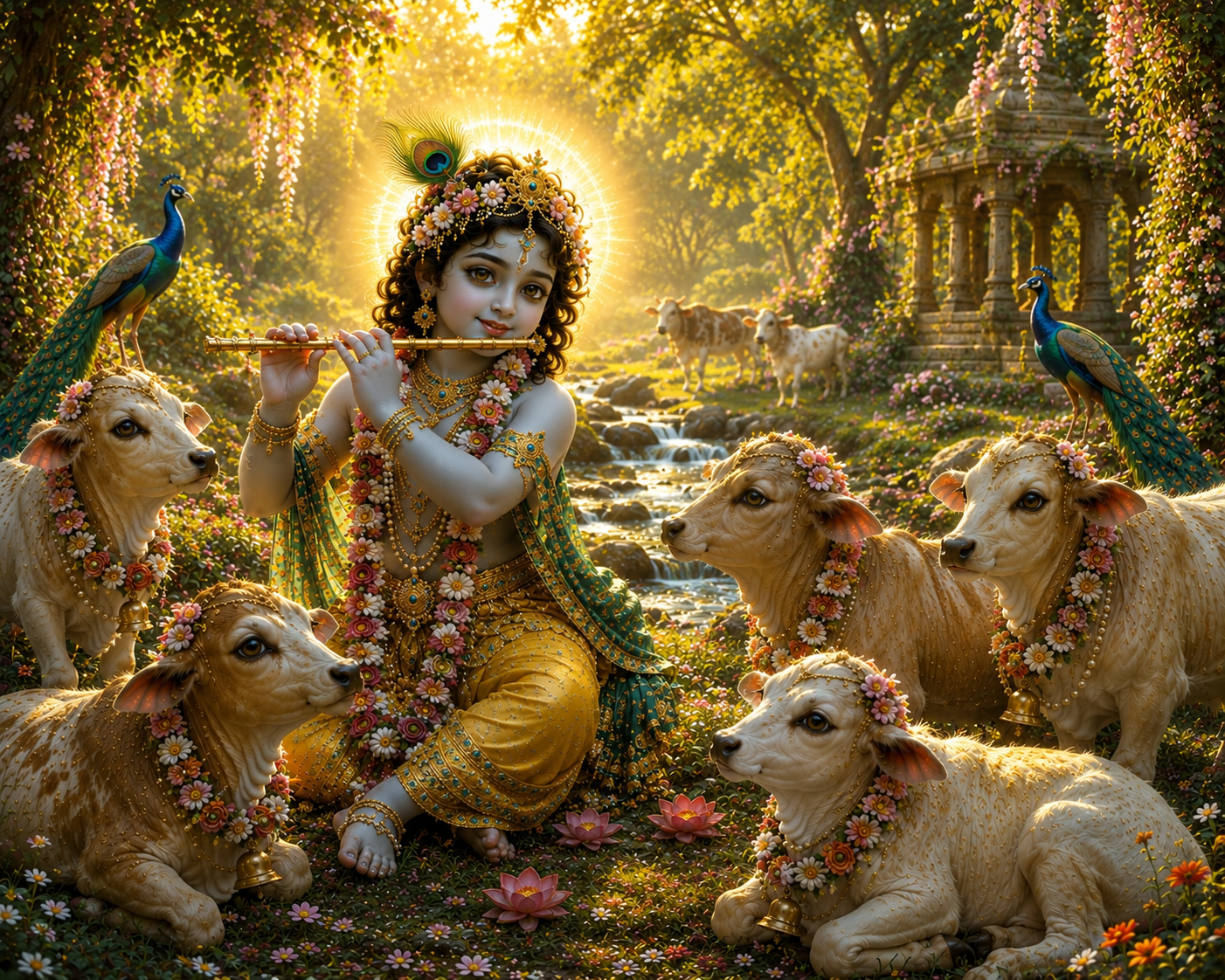
Putana
Krishna series - 7

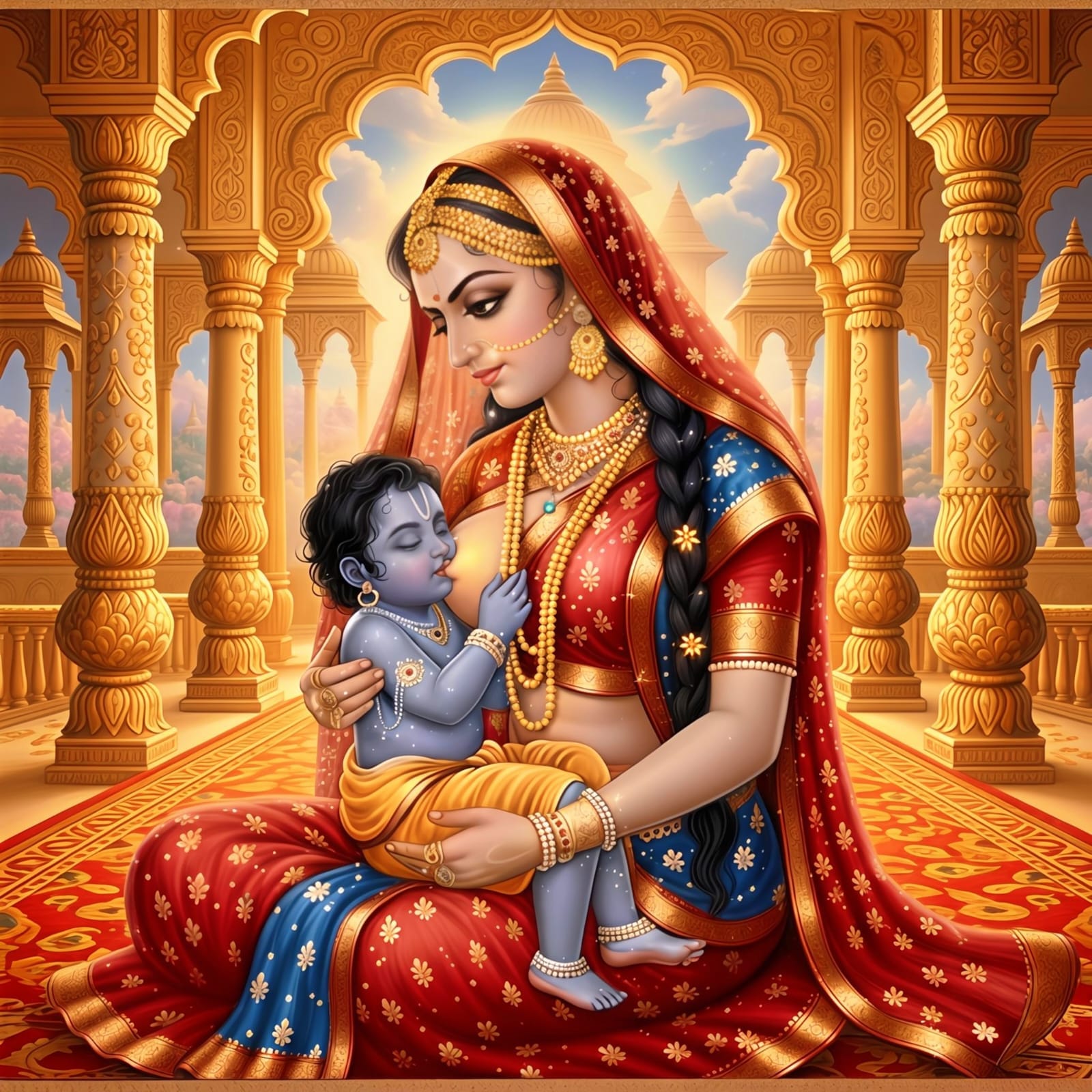
In the previous blog, "Celebration in Gokul," we described how Kans, trembling with anger and fear, confided in his trusted minister about the extraordinary events that had unfolded in the prison. He recounted the chilling moment when the baby girl slipped from his grasp and miraculously transformed into a resplendent Devi. The divine figure, radiant and awe-inspiring, declared that the very child destined to end Kans’ reign of terror had already been born. Alarmed, the minister urgently advised Kans to order the massacre of all newborns in the kingdom to sabotage the prophecy. Meanwhile, in the vibrant city of Gokul, the atmosphere is electric with joy and anticipation. A baby boy, born in the chief’s household, has ignited a wave of celebration throughout the town. Residents, dressed in their finest attire, flock eagerly to the chief’s house, all hoping to catch a glimpse of the divine infant whose arrival promised hope and happiness for all of Gokul.
Now, let's continue this story ....
Kans paced restlessly in his dark palace, the words of his wicked advisors echoing in his mind. At last, he made a dreadful decision: all the newborn children, younger than ten days, in the land would be killed. He schemed late into the night, searching for someone ruthless enough to carry out his cruel orders.
At dawn, Kans called for Putana, a fearsome demoness known for her dark powers. He commanded her to travel through the villages around Mathura and kill every infant she found. Cold and unfeeling, Putana agreed, her eyes gleaming with malice as she set out on her terrible task.
The Disguised Demoness
Putana was flying through the air and saw Gokul. She decided to go there since she had not been there before. Using her supernatural abilities, Putana transformed herself into a stunningly beautiful woman before entering the city.
As Putana explored Gokul, she noticed a splendid house bustling with activity. She chose to enter this residence, which was, in fact, Nand's home.
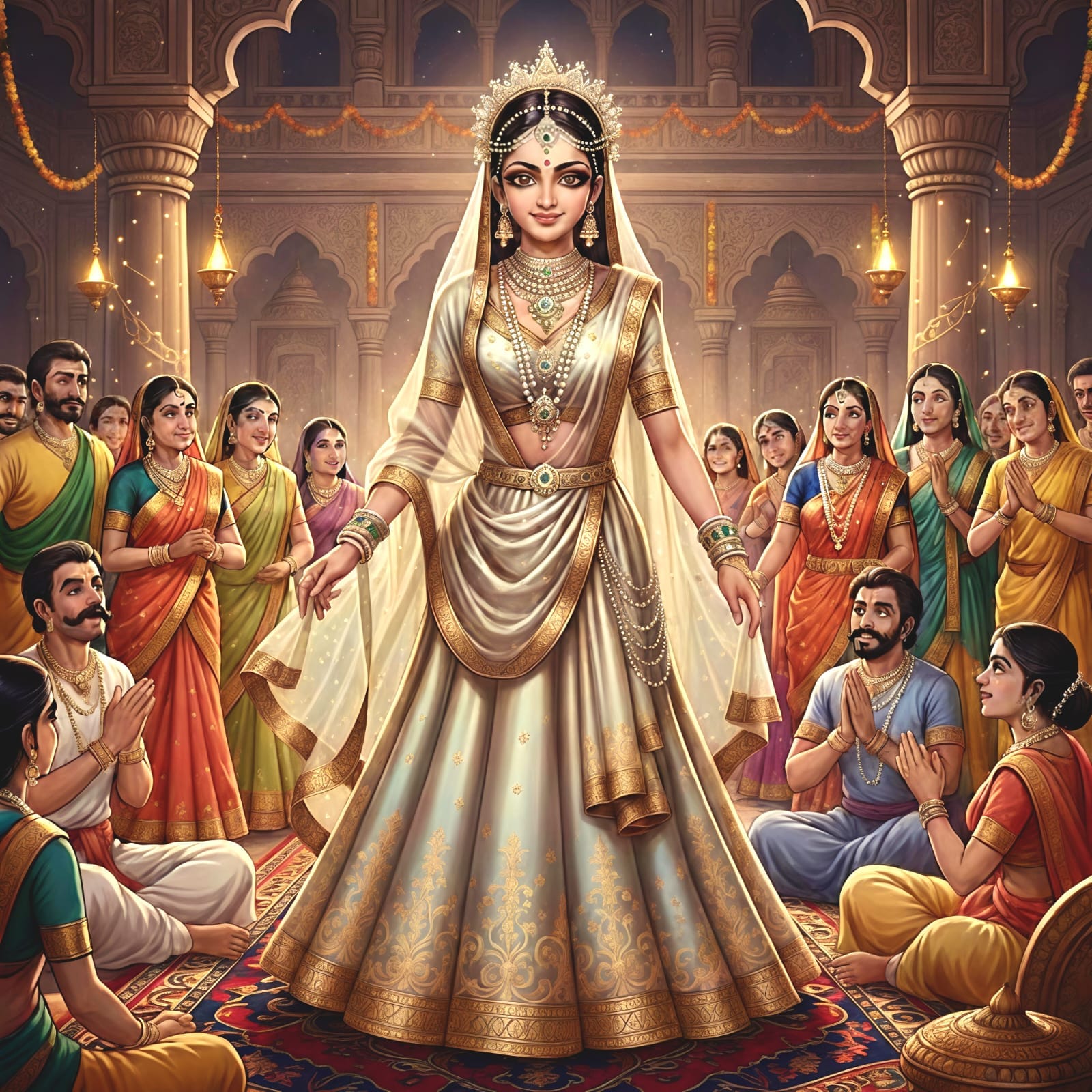
Putana had styled her hair, tying it up in a neat knot adorned with fragrant jasmine blossoms; the gentle breeze seemed to play with her curly hair, further enhancing her allure. Her wide, high, and graceful breasts drew the attention of everyone present. Putana’s charm was undeniable; her presence was captivating. Putana often smiled sweetly, holding a delicate lotus flower in her hand. Seeing Putana’s radiant beauty, the gopis were convinced that she was none other than the goddess Lakshmi herself.
Transformation and Torment
She entered the house of Nand and made her way to the courtyard, where the Lord lay resting in his cradle. He appeared as a mere infant; he had hidden his immense divine power beneath the outward innocence of a child. To any onlooker, he seemed harmless and vulnerable, yet beneath that gentle exterior was a force capable of unimaginable power.
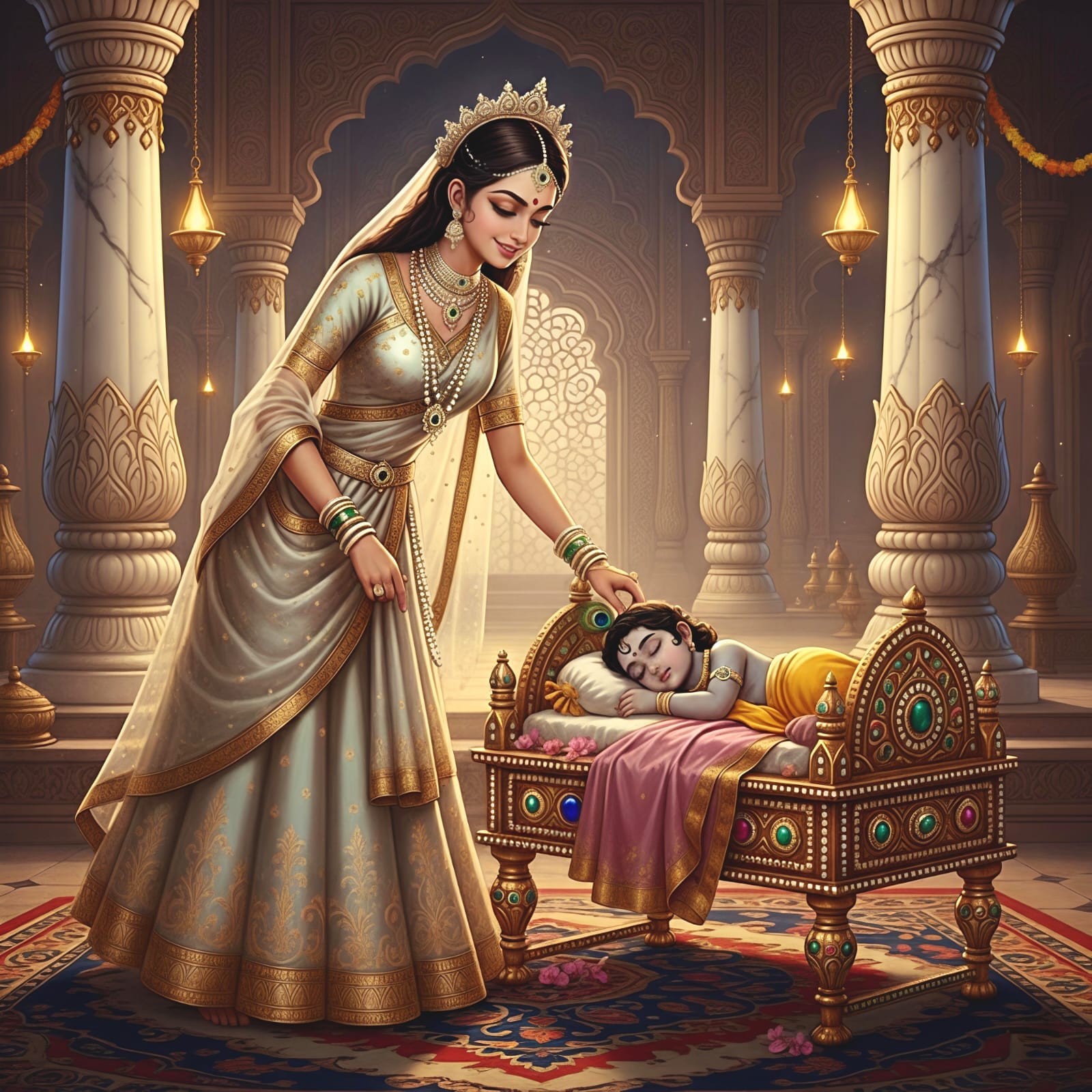
Glancing around and seeing no one nearby, Putana concluded this was the perfect moment. She lifted the child from the cradle and gently cradled him in her arms, taking a seat and placing him upon her lap. In doing so, she unknowingly endangered herself, much like someone who picks up a sleeping cobra and drapes it around their neck, mistaking it for a harmless string. The metaphor emphasises the peril she faced: what seemed innocent and safe was, in truth, deadly and beyond her understanding.
Putana remained unnoticed by everyone, so bewitched were they by her beauty and charm, it seemed as though they were under her magical spell. Putana loosened the knot of her blouse. With the child on her lap, she pressed his lips to her breast, which she had smeared with poisoned milk. The Lord grasped her breast firmly with his tiny hands and began to suckle with vigour. Within moments, Putana realised that he was not merely drinking milk; he was drawing out her very life force. Agonising pain gripped her, and her inner strength was being torn away as he suckled her breast.

Her purpose faded into oblivion, her once-beautiful form now twisted into a gigantic, fearsome demoness. “Leave me, leave me,” she cried again and again, desperately trying to wrench her breast from the child's grasp. She flew into the sky with the baby still attached to her, but her efforts were futile. Her scream of agony tore through the air, so powerful that the earth, the sky, and even distant planets seemed to tremble. People believed a thunderbolt had struck the earth. With one final, anguished cry, Putana's life slipped away.
The Aftermath of Putana's Demise
The gigantic form of Putana fell to the ground, causing all the trees in the vicinity—spanning twelve miles—to topple like fragile twigs. The thunderous sound drew the cowherds to the scene, where startled inhabitants of Gokul discovered a massive woman lying lifeless on the earth.
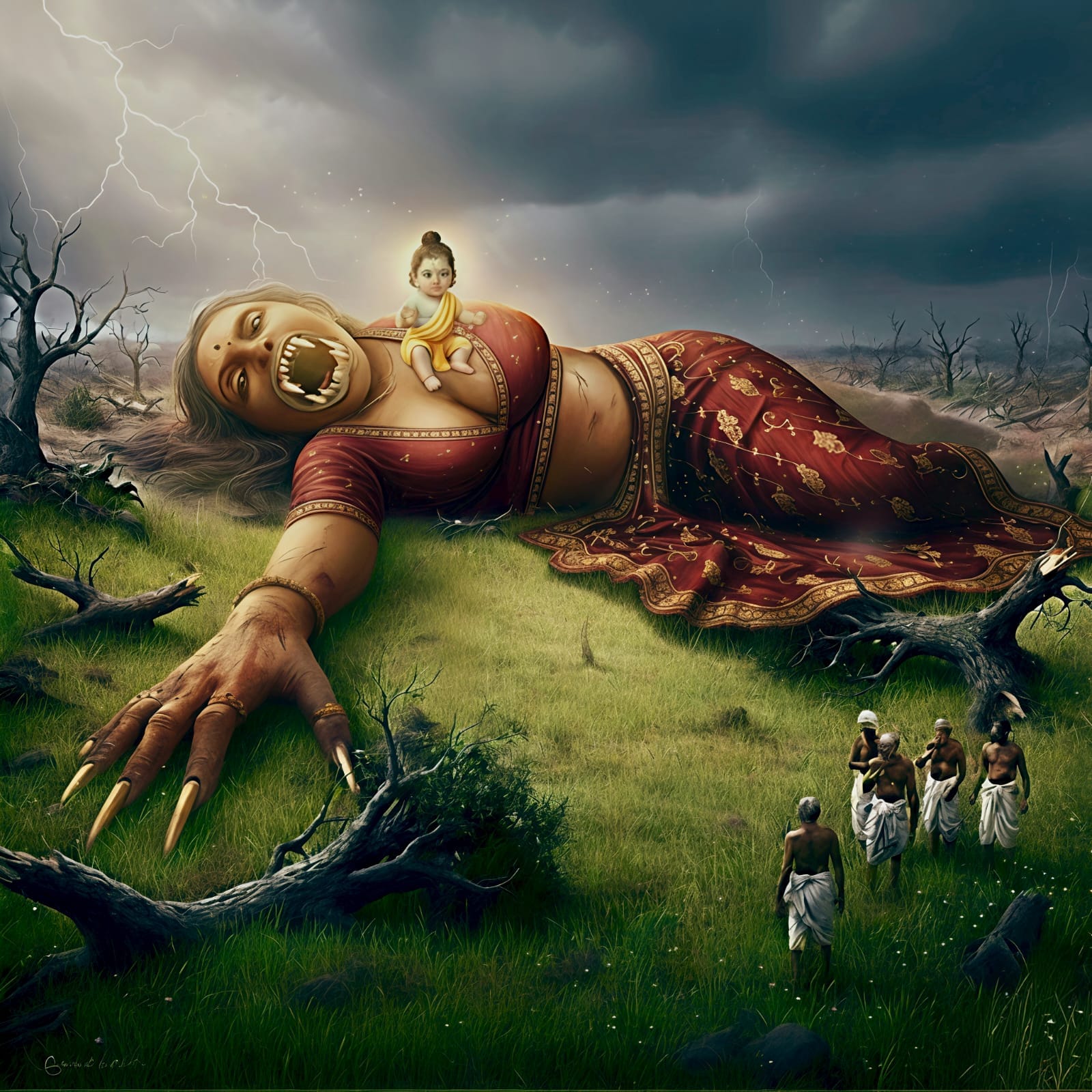
Her appearance was both astonishing and terrifying: her gruesome fangs resembled the yawning mouths of mountain caves; her breasts looked like two boulders that had tumbled from a mountaintop; her eyes were as deep and dry as unused wells; her hips evoked the image of sand dunes; her limbs reminded one of canal embankments; and her abdomen was like a desolate, dry lake. The cowherds stood around her, some filled with awe, while others were overcome with fear.
Suddenly, everyone noticed Nand’s young son, Krishna, playing on Putana’s enormous breast. Fearing for his safety, they fetched a ladder and climbed up to carry him away from the lifeless giantess.
A Mother's Protective Heart
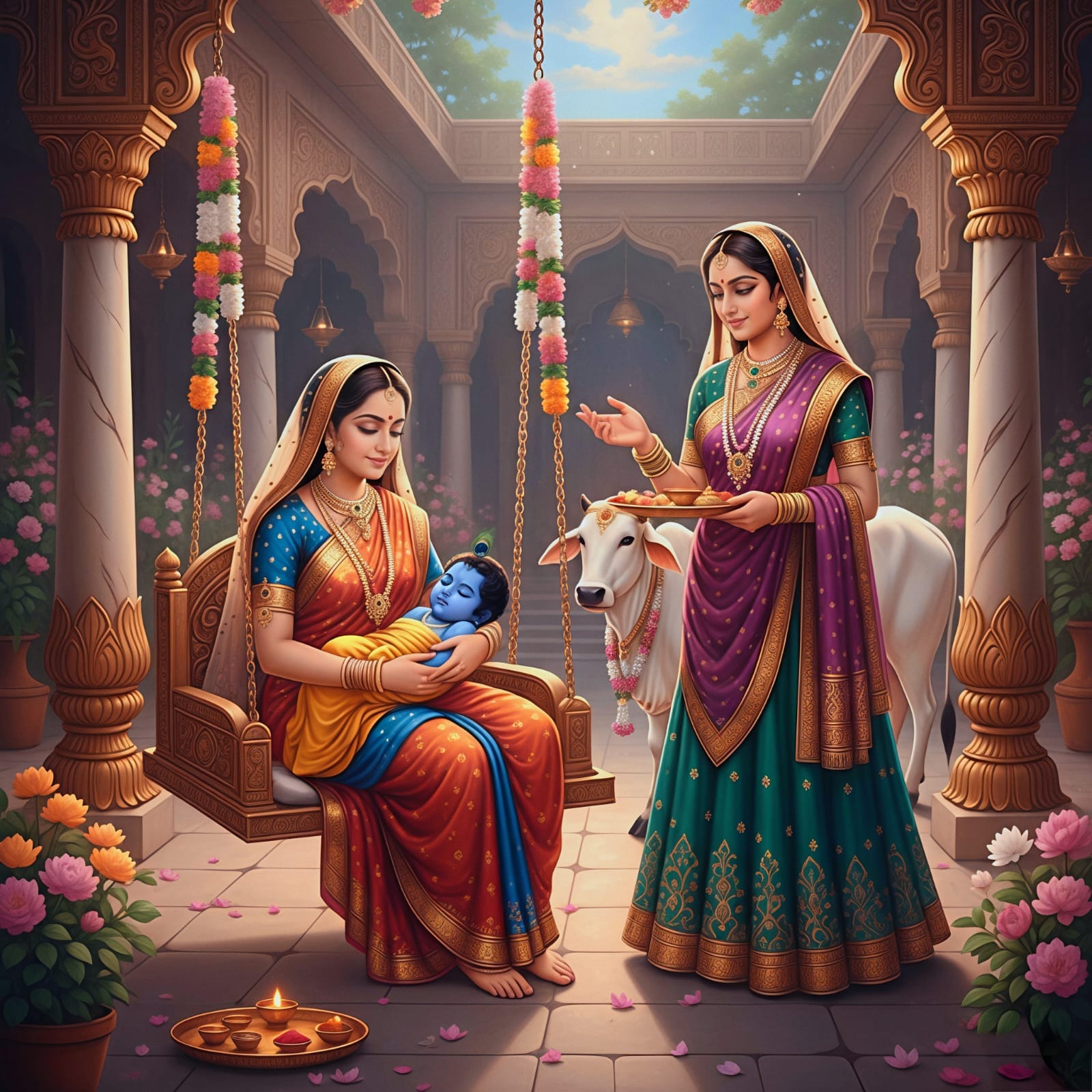
Mother Yashoda stood frozen, her heart thundering in her chest as she witnessed the delicate form of her newborn being lowered from the terrifying grasp of the fearsome Putana. A wave of shock washed over her, mingling with profound relief at the sight of her son—so small, so fragile—returned to her arms.
Beside her, Rohini sprang into action. She began to perform an array of protective rites, each gesture imbued with ancient significance to shield the child from evil influences.

Yashoda then hurried inside with her son, nourished him, and gently put him to sleep, wrapping him in a piece of silk to ensure his comfort and safety.
The Divine Perfume
The cowherd boys, usually so lively and carefree, were now engaged in a grim task. Before them lay the enormous body of Putana, the fearsome demoness. It took all their strength and determination to move her lifeless form. Piece by piece, they cut her up as if she were nothing more than logs of wood. With solemn faces, they piled the pieces high and set them alight.

As the flames consumed Putana’s body, something extraordinary happened. Instead of the expected stench of burning flesh, the air was filled with a wondrous fragrance, the scent of sandalwood and divine perfumes drifted over the crowd. The villagers stood in silent amazement, unable to comprehend this miraculous phenomenon. How could such a beautiful aroma arise from the pyre of a demoness?
Summary
To end the life of the child who was destined to kill Kans, Kans dispatches the powerful demoness Putana, who disguises herself as a beautiful woman to infiltrate the jubilant town of Gokul and poison the chief's infant son. Putana attempts to feed the child poisoned milk, but instead has her very life force drained, causing her to revert to her monstrous form and crash to the earth with a terrifying cry. In a final miraculous event, instead of the expected foul smell, the funeral pyre of the demoness emits a wondrous fragrance of sandalwood and divine perfumes, signifying the purifying effect of the divine infant’s power.